

|
|
|
|
|
Game 1: Saturday, October 3, 1970 at Metropolitan Stadium in Bloomington, Minnesota
|
||||||||||||||||||||||||||||||||||||||||||||||||||||
|
|

@ retrosheet.org |
|
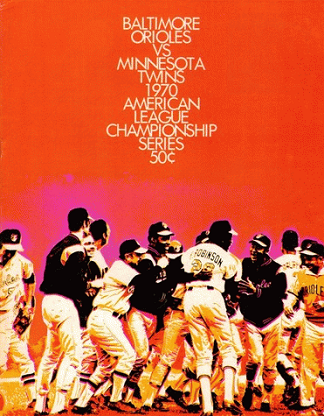
Baltimore only had to use their bullpen once in the series when Dick Hall came on to relieve Mike Cuellar in Game 1. Dave McNally and Jim Palmer both pitched complete games in Games 2 and 3. The Twins enjoyed the lead only once, a 1–0 edge in Game 1. Their only tie was forged one inning later. At all other points, the Baltimore behemoths dominated the action. With the teams deadlocked, 2–2, the Orioles put the game out of reach in the fourth inning, aided by Cuellar's bat and the lusty blasts of a strong wind blowing across Metropolitan Stadium. Two singles and Brooks Robinson's sacrifice fly produced one fourth-inning run off Jim perry, the Twins' 24-game winner, and the Orioles loaded the bases with one out. The lefthanded-hitting Cuellar, with a .089 batting average and 7 RBIs to show for his season's efforts, then pulled a Perry pitch toward foul territory in right field. As the ball passed first base it was patently foul, maybe as much as 15 feet. Cuellar himself stood transfixed at the plate, watching the pellet transcribe a high parabola in the direction of the right-field seats. As the ball soared into the 29-mile-an-hour current, however, it started drifting toward fair territory. Cuellar started jogging from the plate. By the time he arrived at first base, the wind had worked its devilry against the home forces, depositing the ball over the fence in fair territory, and giving Cuellar a grand slam. Before the inning was completed, Don Buford cuffed Perry for a knock-out homer and Bill Zepp yielded a left-field round-tripper to southpaw-swinging Boog Powell to complete the seven-run outburst. Although the O's had an early 9–3 lead, Mike Cuellar was unable to attain maximum efficiency on the cool and windy afternoon and departed in the fifth inning, Dick Hall, 40-year old relief specialist, allowed only one hit in the final 42⁄3 innings to pick up the victory. |